

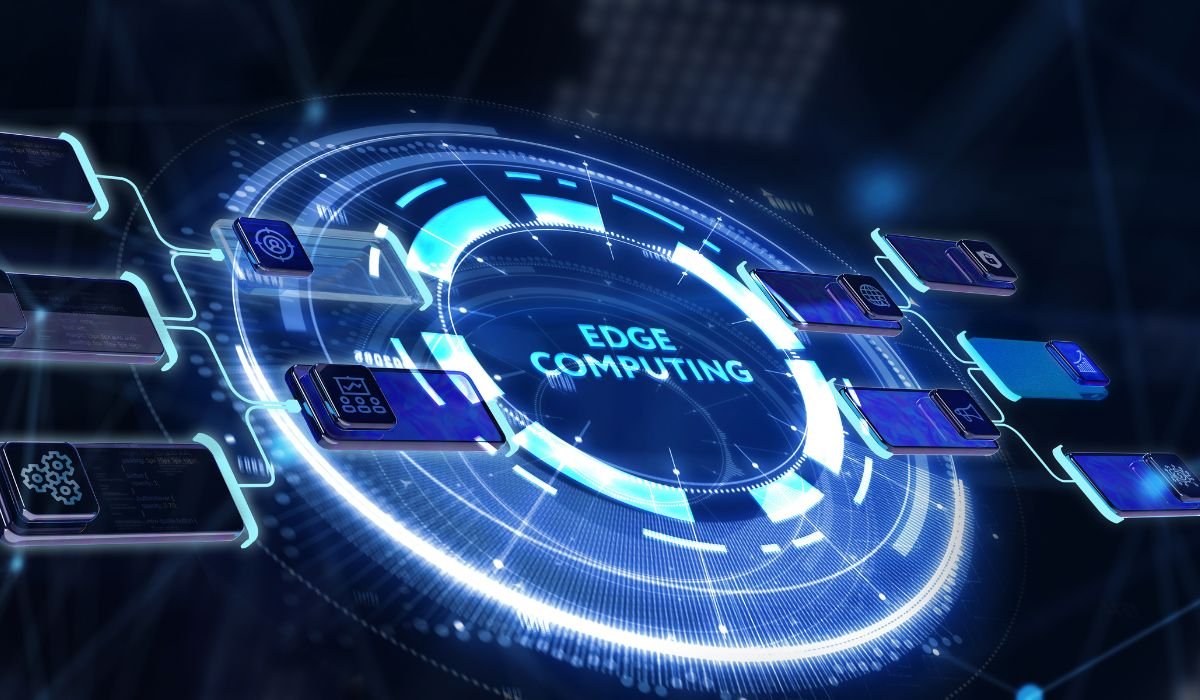
Businesses do not struggle anymore due to the absence of data. Rather, they fight it due to the inability to take action on it quickly. Processing loads of information every second, sensors, cameras, and systems generate enormous streams of it, but such delays often decrease its true value. This disparity between the creation of data and the decisions made has compelled groups of people to revisit their strategy. It is there Edge AI Computing comes to transform the whole scenery. It brings intelligence closer to the source and this will enable a system to react immediately rather than awaiting a cloud command. This means that firms will enjoy speed, control and efficiency in their day-to-day operations. In addition, this transformation promotes enhanced privacy, enhanced resilience, and enhanced experiences in industries during user interactions. In the subsequent parts, you will delve into the functionality of the Edge AI computings, its relevance in recent times as well as how companies can successfully implement the concept to achieve success in the long term.
What is Edge AI Computing?
Edge AI Computing is an allocated combination of artificial intelligence and local computing system, data processing is carried out where it is produced. Instead of transmission of raw data to remote servers, the systems manipulate it on the ground and provide a real-time response. Thus, the process will eliminate delays and make the decision-making process much faster.
In the real world, it implies that machines, cameras, sensors among others can act autonomously. To illustrate an instance, retail shops that have a smart camera can monitor the movement of customers and determine empty shelves automatically. It does not have to upload hours of footage to cloud solution. Instead, it will transmit only valuable information, which will limit bandwidth consumption and enhance productivity.
Edge AI Computing Importance in Modern Business Environments
Edge AI Computing has been picking up lots of traction due to the demands of businesses for quicker and more trustworthy solutions. With further digitalization of industries, a large amount of data is generated at an accelerated rate. Therefore, conventional cloud systems do not effectively support real-time requirements.
To start with, businesses are currently working in surroundings where the directly proportional relationship exists between delays and performance. As an example, in manufacturing or transportation, a few seconds of delay may translate to loss of money. As a consequence, local processing is needed. Second, decentralized intelligence is a requirement due to the emergence of interrelated devices. Equipment has to be self-operating to guarantee efficient operations.
Moreover, the rules of privacy are now a lot stricter and this compels organizations to deal with data in a more cautious manner. As Edge AI Computing is local in storing data, it minimizes exposure risks and enhances compliance. Simultaneously, it will allow the connections to remain operational even in the case of the network becoming unstable.
Key Factors Driving Adoption
- Rapid growth of IoT devices
- Increasing need for real-time insights
- Advancements in AI hardware
- Rising data privacy concerns
- Demand for reliable offline systems
Due to these aspects, it has been growing in industries and applications.
Edge AI Computing Benefits for Enterprises
The reason why modern enterprises use intelligent edge systems is their requirement to have quicker insights, enhanced control, and enhanced cost management. Local processing of data in their systems enables organizations to respond immediately and save them from unnecessarily long delays. In addition, the method will enhance efficiency and reliability in operations.
1. Real-time decision making
Data is processed where the data is generated in the organization and hence systems do not have to wait to receive information outside. Consequently, line sensors identify malfunctions on the production line and customer-reporting systems replicate customer behavior in real time. Such an immediate reaction enhances greater accuracy, as well as minimizes operational risks.
2. Data privacy and security
Local devices hold sensitive information of companies and thus companies are not exposed to threats outside. Thus, enterprises will be more in line with data policies and have a more reliable customer bond. Simultaneously, they do not need to transfer any data that is not necessary and can raise vulnerability.
3. Cost optimization and resource efficiency
By processing unrelated information but instead of processing only useful information, organizations minimize the dependency on the cloud. As a result, they reduce bandwidth cost and storage expenses and enhance efficiency. This will also help in maintaining the smooth running of the systems without high infrastructure costs.
4. Operational efficiency and automation
Automation of processes is done at the point of origin, which is more productive in terms of time savings on manual labor. As an example, machines automatically adjust settings according to the real-time data, which improves the quality of output. Thus, the operations are more reliable and fast.
5. System reliability and resilience
This is due to the fact that systems do not go down when the network is affected, since it is not dependent on the network to get local processing. Consequently, organizations are kept afloat and save businesses the expensive downtime. This robustness is particularly significant in remote or under-critical environments.
Edge AI Computing in Retail and Customer Experience
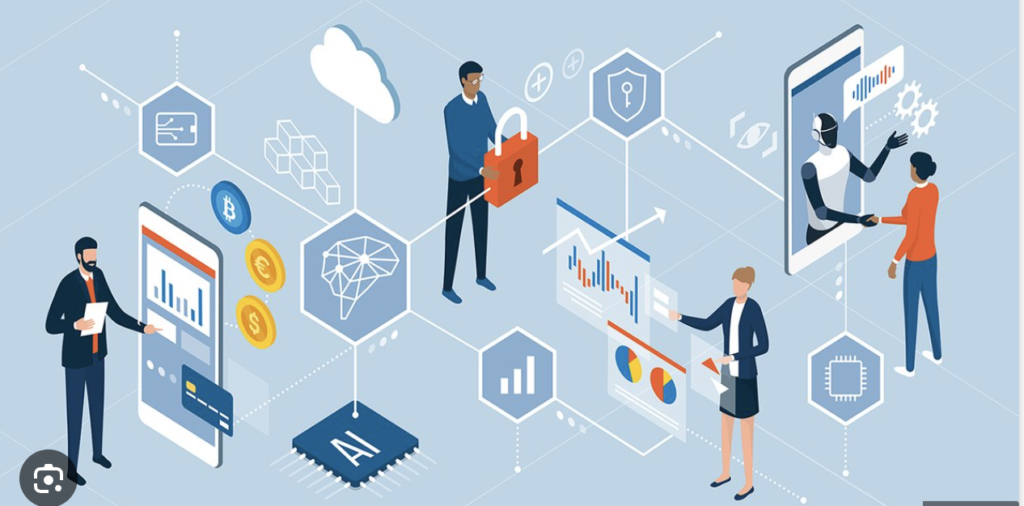
Real-time insights form an essential part of retail environments and Edge AI computing is critical in enhancing customer experience. Intelligent systems are now being used in stores to track behavior and manage inventory, as well as provide customers with personalized interactions.
To give an example, smart shelves with sensors will be able to recognize a drop in stock levels. The system produces an immediate alert to the staff, thereby avoiding lost sales. In the same way, the cameras examine movement patterns of customers and this is used to help businesses perfect the store layouts and enhance interaction.
In addition, it facilitates customized experiences in brick and mortar stores. Digital displays are able to indicate personalized recommendations depending on customer tastes. This occurs immediately hence making the shopping process fluency.
Edge AI Computing Applications in Industrial Operations
Fast and reliable systems are important in industries like manufacturing and oil and gas, which are in their beneficiary of Edge AI Computing. The environments of these are frequently remote or high-risk, and where any delay may have serious consequences.
Industrial Use Case:
| Industry | Application Example | Outcome |
| Manufacturing | Real-time defect detection | Improved product quality |
| Oil & Gas | Leak detection systems | Enhanced safety |
| Logistics | Smart warehouse monitoring | Faster operations |
These applications indicate the ways Edge AI Computing is used to facilitate critical operations.
Edge AI Computing Strategy for Scalable Implementation
Companies need a well-considered strategy to roll out edge-based intelligence effectively since unplanned rollouts can provide inefficiencies. By aligning technology with business objectives, companies are able to attain consistent and scalable outputs.
1. Identifying high-impact use cases
Businesses should begin by selecting areas where real-time decisions create immediate value. For example, safety monitoring and customer engagement often deliver quick results. This focused approach ensures that early implementations generate measurable outcomes.
2. Integrating with existing systems
Companies must connect edge systems with current infrastructure to ensure smooth data flow. This integration allows insights from local devices to support broader business operations. As a result, organizations avoid isolated systems and improve coordination.
3. Training teams and improving processes
Insights require appropriate training to be learnt and applied by employees. As such, the organizations must invest in the improvement of skills and processes. This guarantees adaptability to a new system and maximization of system benefits by teams.
4. Implementing strong security measures
To safeguard gadgets against cyber crimes, business organizations need to encrypt and maintain vigilance of devices. As a result, they ensure the integrity of systems and minimize the risks. Security forms a serious consideration in success in the long-term.
5. Scaling deployments gradually
The organization needs to begin with some replica implementations and then expand on the outcomes of the implementations. This step-by-step process minimizes risks and enables an iterative process. This leads to the sustainable growth of companies.
Edge AI Computing in Smart Devices and IoT Systems
The everyday smart device has also become a necessity of edge AI Computing and is better performing with local processing. AI is currently directly deployed on smartphones, wearables, and home automation. As an example, voice recognition and image recognition on smartphones can be done in the device, and this is faster and more confidential. Likewise, smart home appliances automatically change the settings, depending on human activity. These operations are immediate without the implementation of cloud connectivity.
Also, health conditions are tracked in real time via wearable gadgets. They monitor abnormalities and give notifications in real-time, enhancing user safety. Thus, it increases functionality and user experience.
Edge AI Computing Future Trends and Business Growth
Edge AI computing is a constantly developing technology. Computers are becoming even smarter and AI models are becoming even more efficient. Consequently, companies are able to easily and cheaply implement intelligent systems. More so, industries are shifting towards automation and real-time decision making. It helps facilitate this transition by facilitating quicker and more efficient processes. Early adopters of this approach have a great competitive edge. Moreover, there will be a more integrated edge and cloud system. The hybrid approach will enable companies to achieve the right balance between speed and scalability.
Conclusion:
Edge AI Computing puts intelligence into immediate action, and this changes the nature of business operations in real time. It minimizes the time wastage, enhances privacy, and efficiency within industries. This practice is of growing significance in preserving performance and creating a competitive environment as organizations continue to produce more data.
Furthermore, modern investments in Edge AI Computing are a way of establishing a company in the future. They will have improved fast decision-making skills, enhanced system reliability and improved customer experiences. As such, the decision to embrace this technology is not only an option but a strategic decision that will make it successful in the long term.
Also Read About :- Business Robthecoins