


Modern enterprises rely on complex digital systems to run daily operations, and among them, SAP stands as one of the most widely used platforms across industries. It deals with finance, supply chains, Hr, and customer operations, thus a few problems can cause a shock in the whole processes. Due to this, companies pay much attention to testing prior to each release so as to ensure stability and performance. In this article, you can discover the Best 10 SAP Testing Tools which assist the team to become more accurate, risk-averse and provide stable systems. All tools serve different functions and knowing what each tool has will assist you to choose the optimal tool. In addition, you will also see how these tools facilitate SAP automation, integration, and scalability in real-world settings.
What is SAP Testing?
SAP testing is a process of verifying SAP applications where all business procedures run without any errors. As far as the SAP systems have inter-departmental connectivity, failure of any of them can impact reporting, transactions, or even the customer experience. That is why organizations invest in some form of structured testing procedures to eliminate such issues. Besides, it is connected to the workflow verification, the accuracy of data, and the combination of the integrations. The teams undertake regular regression testing, functional testing, and performance testing. Consequently, they minimize risks of system failures when updating or migrating the system.
Best 10 SAP Testing Tools That Improve Testing Efficiency
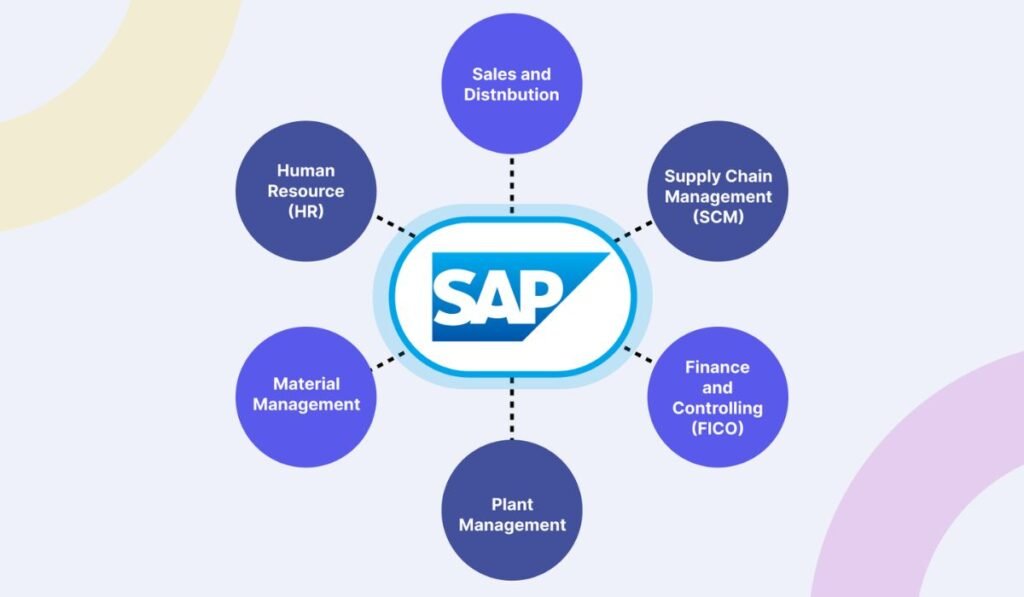
The SAP testing tools are still developing with the increase in the enterprises’ needs. Consequently, it is necessary to have organizations to be informed of the capabilities of any tool before deciding. Each tool will be described in the following section, covering features, usability, and real benefit to the world.
~ AI-Driven SAP Automation with CoTester Platform
CoTester is an innovative method of managing SAP testing that incorporates both automation and smart decision-making. Teams can specify testing requirements using simple language, as opposed to writing complex scripts. Consequently, the tool will automatically generate structured test cases, thus saving on time and effort.
Besides, CoTester is self-healing and changes in line with changes in the system. The tool is updated automatically as user interface elements are changed without the need of manual update of the test cases. Thus, the teams will use fewer hours maintaining scripts and use more time on better test coverage. This is effective in a dynamic SAP environment, whereby updates are frequent.
~ Visual Workflow Testing Approach in Leapwork Platform
Leapwork makes SAP testing easy to use, as visual workflow design can be done. Testers do not need to use their coding skills to build automation flows: logical blocks can be linked together. It is due to this that the platform is made reachable to both the technical and non-technical users.
Moreover, Leapwork ensures that testing is made consistent across systems. It is compatible with older and newer SAP, and it is thus adjustable to firms with various infrastructures. Nonetheless, cost considerations have to come into play at the expense of small businesses as they grow in size.
~ Unified SAP Testing Strategy Using ACCELQ System
ACCELQ offers a consolidated platform upon which a team is able to design, run and administer test cases within a single location. This combined strategy minimizes these problems: there is no fragmentation, and it enhances the coordination of testing activities. As such, organizations become more efficient and have shorter execution cycle lengths.
Also, ACCELQ is compatible with a variety of platforms, including web, mobile and backend systems. Owing to this, it deals with sophisticated SAP systems. This is also reusable, minimising duplication, which aids the team in preserving consistency in their workflows. Despite the fact that the learning curve is present, the rewards in the long term are worthy of the first mover.
~ Risk-Focused Testing Method with Tricentis Platform
Tricentis transforms the conventional method of testing that concentrates on risk-based analysis. It does not test all the components equally, but emphasis is laid on the key business processes and these are prioritized. Consequently, teams are able to provide more effective resource allocation and testing resources that are not necessary.
Besides, the platform also offers change impact analysis to enable the teams to know the impact of updates on the system. This understanding will enable them to deal with any emerging concerns prior to deployment. As a result, organizations are able to maintain stability in their systems and increase the speed of release.
~ Open Source SAP Testing Flexibility Through Selenium Framework
Selenium is also a popular automation framework which is flexible and open-source. It enables developers to develop their own custom test scripts in case of web-based SAP applications. Through this, teams will be able to create testing solutions that suit their requirements.
Non-technical users will have to be restricted in using Selenium, however, because it requires knowledge of programming, an error it has made. However, notwithstanding this setback, it has good scalling capability and cross-browser. Hence, the organizations, which have trained development teams, usually like Selenium in terms of its power and flexibility.
~ Native SAP Functional Testing Using eCATT Tool
SAP eCATT is directly integrated with SAP environment and this is what renders it a valuable option of functional testing. It enables teams to automate transactions and authenticate the workflows effectively. It gives precise and uniform results since it is deeply embedded in the SAP systems.
Additionally, eCATT allows testing with data-driven testing, which can assist teams to test various cases fast. This capability enhances coverage and gives assurance that various business cases could be effectively tested. But this is limited by its attention to SAP GUI hence restricting its use in the contemporary web based applications.
~ End-to-End Business Process Validation with Worksoft Certify
Worksoft Certify aims at certifying the entire business process, rather than elements. The strategy will guarantee that work processes operate properly in any interoperable systems and departments. This is why it is utilized by organizations to ensure efficiency in their activities.
The platform is also codeless and hence provides business users with an opportunity to engage in testing. Such a partnership enhances the accuracy of tests since domain experts are directly involved. Though the time of execution can differ, the general reliability of results is high.
~ Multi-Platform SAP Automation with TestComplete Solution
TestComplete offers flexibility in that it supports both script based and keyword based testing techniques. This two-fold strategy makes use of the platform by the teams that possess different levels of skills. Therefore, organizations will be able to change their testing strategy in line with project requirements.
Also, TestComplete has sophisticated object recognition versions which enhance the test stability. Though the properties are dynamic, it picks elements within user interfaces. Thus, teams are not disrupted as much when carrying out their execution. Although there are certain cost considerations, the platform provides good value on complex projects.
~ Enterprise SAP Testing and Integration with OpenText Platform
OpenText has tested solution that can be used in large SAP systems. It serves the solution of SAP S/4HANA and cloud computing. Due to this, it satisfies the requirements of the businesses that have elaborate infrastructures.
Moreover, OpenText offers centralized test management, which enhances visibility of the testing activities. Teams are able to track performance, and can detect any problem in real time. Despite possible technical skills needed to set-up, the platform provides efficiency and reliability in the long term.
~ Centralized SAP Testing Control with SAP Solution Manager
SAP Solution Manager will serve as a key point of control of testing. It enables teams to plan, execute and monitor tests using a unified platform. It is also accurate in giving insights into the performance of the systems because it integrates directly with SAP.
In addition, the tool has change impact analysis that is used in determining the process that will be affected when there are changes. This aspect makes the critical workflows stable. Being one of the packages that come with SAP license, it can be used without paying extra money hence it is a favorable option to most businesses.
Conclusion:
The Best 10 SAP Testing Tools allow businesses to remain stable, increase the effectiveness of testing, and minimize operational risks. Hence, a choice of an appropriate tool guarantees the reliability of SAP systems even during the period when the demands of the business increase.
Also Read About :- ChatGPT for Automated Testing